Thawing Frontiers: NATO’s Arctic Sentry Mission Confronts Climate-Driven Geopolitics
- Jack Oliver
- Feb 12
- 4 min read


The Arctic is warming at more than twice the global average, with sea ice extent and volume hitting record lows in recent years. As ice retreats, NATO launched its new Arctic Sentry mission on February 11, 2026, framing environmental transformation as a direct security challenge.
This multi-domain initiative, led by Joint Force Command Norfolk, coordinates Allied activities, including exercises like Denmark’s Arctic Endurance in and around Greenland and Norway’s Cold Response, to strengthen NATO’s posture in the High North, identify security gaps, and counter growing Russian and Chinese activity.
A Landscape in Rapid Flux
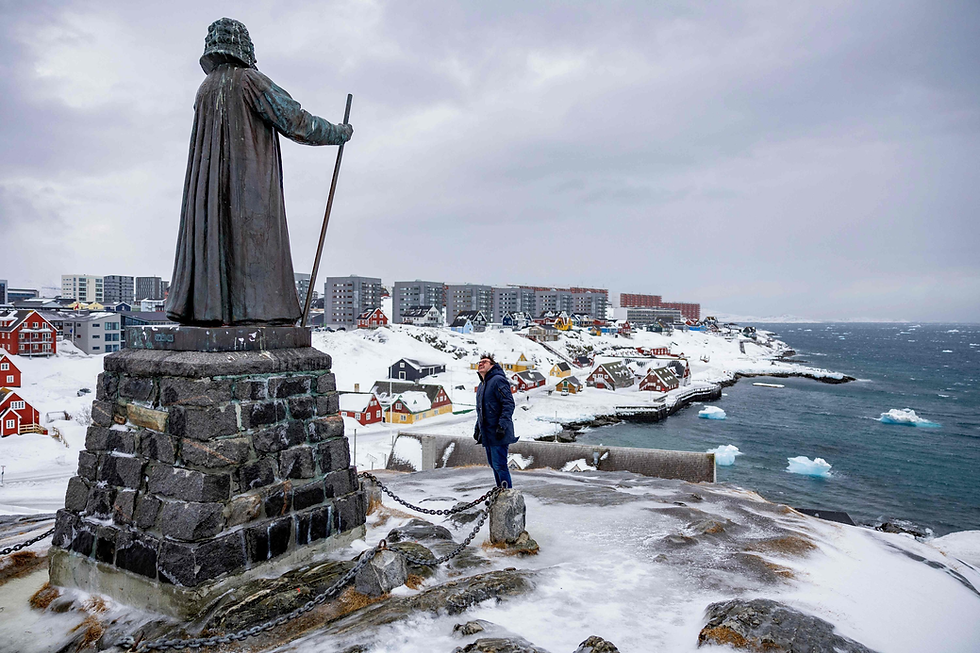
Greenland’s ice sheet, which covers about 80 percent of the island, is melting at an accelerating pace. This exposes vast areas of land, unlocks mineral deposits, and opens new trans-Arctic shipping corridors. Routes such as the Northwest Passage could dramatically shorten distances between Europe, Asia, and North America, potentially by thousands of kilometers, while transforming global trade patterns.
These changes bring economic opportunities but also profound risks. Retreating ice reveals critical minerals, including rare earth elements essential for renewable energy technologies, batteries, and defense systems. Greenland ranks among the world’s top holders of such reserves.
Increased maritime traffic heightens the danger of accidents, oil spills, and pollution in one of Earth’s most fragile ecosystems. Heavy fuel oil, still widely used in Arctic shipping, breaks down slowly in cold waters and is notoriously difficult to clean up, threatening marine life, seabirds, and the subsistence hunting and fishing central to Inuit communities.
From Cold War Outpost to Climate-Era Flashpoint
Greenland’s strategic value dates back to World War II and the Cold War, when the United States established bases there, including the enduring Pituffik Space Base, formerly Thule. Denmark retains sovereignty, but Greenland enjoys significant self-government under the 2009 Self-Government Act, with its Inuit-majority population increasingly asserting control over resources and foreign policy matters.
Former President Donald Trump’s renewed interest in acquiring or securing greater influence over Greenland, first floated prominently in 2019 and revived in 2025–2026, intensified debates. Tensions peaked with threats of tariffs and stronger rhetoric, but a framework agreement emerged from Trump’s January 2026 meeting with NATO Secretary General Mark Rutte at the World Economic Forum in Davos.
The so-called “Davos compromise” de-escalated immediate conflict by channeling efforts into enhanced collective security cooperation rather than unilateral action, paving the way for initiatives like Arctic Sentry. Denmark has responded by expanding its military presence through operations like Arctic Endurance, now integrated into the broader NATO effort.
The Geopolitical Undercurrent
Russia has expanded its Arctic military infrastructure, reopening Soviet-era bases and conducting frequent exercises. China, though not an Arctic state, pursues economic inroads via the Polar Silk Road, investing in infrastructure, research, and shipping to secure resources and shorter trade routes.
NATO officials describe Arctic Sentry as a measured response to these dynamics, emphasizing deterrence and surveillance without establishing permanent new combat deployments. Yet the mission arrives amid a region already stressed by climate change, where melting permafrost complicates infrastructure and ice-free waters enable greater operational access for all players.
Environmental Stakes Cannot Be Ignored
Increased shipping and resource extraction amplify existing pressures. Oil spills in icy conditions spread differently and degrade slowly, with limited response infrastructure available. Underwater noise from vessels disrupts marine mammals, while black carbon emissions from shipping accelerate ice melt in a dangerous feedback loop.
Indigenous communities in Greenland and across the Arctic face disrupted traditional ways of life, food insecurity, and cultural threats. Biodiversity hotspots, critical for seals, whales, seabirds, and fish stocks, are particularly vulnerable.
“The irony is sharp,” said Dr. Ingrid Mikkelsen, Arctic environmental researcher. “Minerals exposed by climate change are vital for the green transition, yet unchecked development risks further ecological harm.”
Toward Climate-Aware Security
Arctic Sentry risks contributing to militarization in a region already strained by warming. A more sustainable path requires integrating defense with ambitious environmental governance. This includes:
Binding international standards for low- or zero-emission shipping in the Arctic
Expanded marine protected areas
Strict protocols for oil spill response and a phase-out of the dirtiest fuels
Investment in green technologies for any resource extraction
Greenland’s democratically elected government, led by Inuit representatives, must hold a central voice. The island’s people have consistently prioritized environmental protection alongside economic development, as seen in past decisions on mining projects and uranium bans. True security in the Arctic means respecting self-determination and Free, Prior, and Informed Consent (FPIC) principles.
NATO has an opportunity to pioneer “climate-aware deterrence”, treating environmental stability and resilience as core security assets rather than afterthoughts. This could involve joint monitoring of climate impacts on infrastructure, collaborative research on sustainable Arctic operations, and diplomatic efforts to strengthen the Arctic Council’s environmental mandate alongside security cooperation.
The launch of Arctic Sentry marks a recognition that in the 21st century, the Arctic’s thawing frontiers blur the lines between environment and geopolitics. How the alliance and the broader international community navigates this will shape not only regional stability but the planet’s climate future. Balancing vigilance with stewardship, and great-power competition with cooperative governance, is the real test ahead.


Comments