Munich's Nuclear Reckoning: How Merz and Macron Are Forging Europe's Atomic Shield
- Jack Oliver
- Feb 16
- 4 min read


A Stark Warning in Bavaria
As the Bavarian Alps stood sentinel over the 62nd Munich Security Conference, Europe's leaders faced a stark new reality: the transatlantic nuclear umbrella, once ironclad, is fraying at the edges.
In a conference hall buzzing with urgency, German Chancellor Friedrich Merz delivered a bombshell that echoed from Lisbon to Warsaw:
“The rules-based order no longer exists.”
His words were not hyperbole. They were a call to arms. At the center of the reckoning are confidential Franco-German talks on a European nuclear deterrent, a bold pivot toward strategic autonomy amid waning U.S. guarantees.
This is not alarmism. It is reckoning.
With Donald Trump's America prioritizing “America First” over Article 5 assurances, and Russian submarines prowling the Arctic, Europe is awakening to a nuclear gap it can no longer ignore. Merz and French President Emmanuel Macron are leading the charge, turning vulnerability into resolve.
The Geography of Exposure
Europe's 450 million citizens stretch from the Atlantic to the Black Sea. Yet its nuclear backbone remains perilously thin: France's Force de Frappe and the United Kingdom’s Trident system.
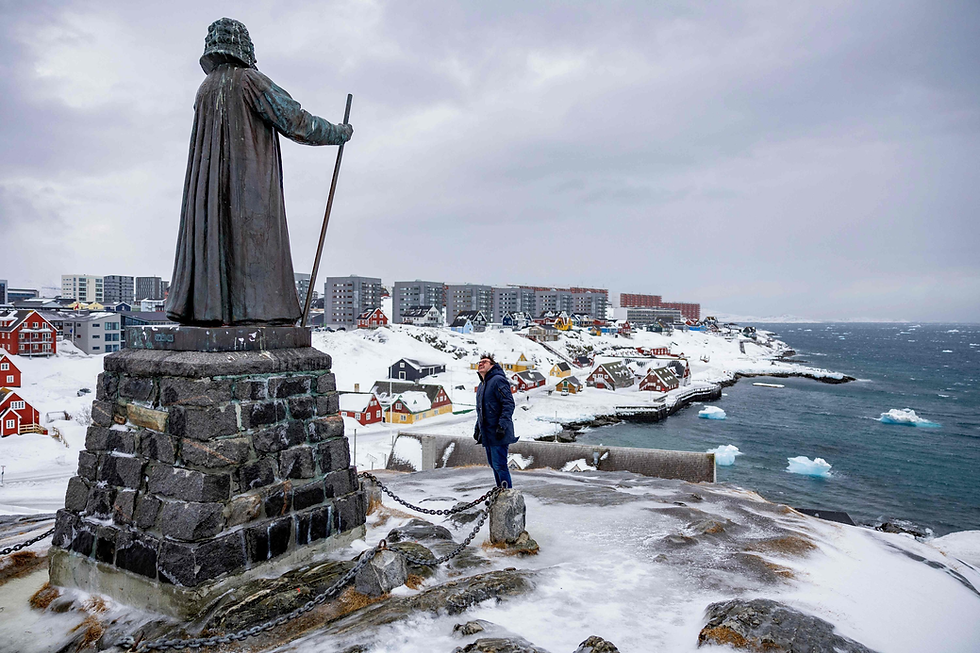
The Arctic flank, epitomized by Greenland, a Danish autonomous territory, exposes the alliance's northern artery. Vital for NATO resupply and now a flashpoint in great-power rivalry, the island has drawn Trump's repeated overtures, from tariff threats in January to ongoing “national security” claims that Danish Prime Minister Mette Frederiksen confirmed this week remain “very serious.”
Merz framed the strategic imperative plainly in Munich:
“We're not writing off the alliance. We're building a strong, self-supporting European pillar.”
Macron echoed the sentiment, urging a “holistic” rearticulation of deterrence that blends nuclear resolve with conventional deep-strike capabilities.
A Timeline of Shifting Sands
The seeds of today's debate were planted decades ago.
Post-1945, America's extended deterrence, from the Berlin Airlift to Pershing II missiles, preserved the peace. France asserted nuclear independence in 1966. Britain followed with its own sovereign force.
But cracks widened.
2022: Russia's invasion of Ukraine laid bare Europe's conventional shortfalls, exposing reliance on U.S. resolve.
2024–2025: Trump's return and JD Vance's fiery 2025 Munich Security Conference speech demanded Europe “pay up,” questioning the sanctity of Article 5.
January 2026: Trump's Greenland fixation escalated, with tariffs on Denmark and allies threatened until a “deal” materialized, prompting European deployments and diplomatic frost.
February 13, 2026: Merz confirmed “initial talks” with Macron on European nuclear deterrence. Macron pledged consultations to “rearticulate” France's doctrine, including discussions with Germany and the United Kingdom.
The Munich Security Report 2026, titled Under Destruction, captured the mood: the post-World War II order is “no longer a normative bond.”
Merz drove the point home:
“Our freedom is no longer a given.”
The Deterrence Dilemma: Options on the Table
Europe currently hosts roughly 300 U.S. nuclear weapons under NATO sharing arrangements in Belgium, Germany, Italy, and the Netherlands. Yet with Trump eyeing a pivot to the Indo-Pacific and domestic retrenchment, that shield feels increasingly conditional.
Recent analyses such as the European Nuclear Strategy Group report Mind the Deterrence Gap outline three viable paths.
1. Bolstered UK-France Core
Leverage existing arsenals. France maintains approximately 290 warheads. Britain fields the Trident system. The 2025 Northwood Declaration already commits London and Paris to joint planning against “extreme threats” to Europe. Merz and Macron are accelerating this into what could become a de facto European backstop.
2. Supranational Eurodeterrent
A shared command structure, potentially under a Franco-German-Polish axis, integrating planning without new proliferation. Macron's March speech on French doctrine is expected to flesh out this “special cooperation,” including joint exercises.
3. Broader European Roles
Germany and Poland could expand contributions, whether financial, conventional, or doctrinal. The politics are fraught. Germany's post-World War II aversion to nuclear weapons collides with strategic imperatives. Poland's frontline status makes it a natural partner.
Critics warn of risks: French sovereignty jealously guarded, German pacifism entrenched, and the enduring taboo of proliferation.
Yet inaction invites peril. As one ENSG expert observed:
“A European deterrent built around the UK and France maintains the existing nuclear order while buying time.”
The Greenland Shadow and Political Headwinds
Trump's Greenland gambit, framed as securing Arctic routes against Russia and China, has galvanized Europe.
Protests in Copenhagen, Danish troop surges, and European Union unity against “force or tariffs” underscore the stakes. Merz's call for “sacrifices,” including higher defense budgets and potentially conscription, lands like a political grenade in Berlin, where defense spending hovers near 2 percent of GDP and public appetite for more remains cautious.
Macron offers a calibrated vision:
“A stronger Europe will be a better friend to the United States.”
His goal is deterrence without decoupling from NATO. A geopolitical Europe that strengthens the alliance rather than fractures it.
From Reckoning to Resilience
By 2030, a credible European nuclear umbrella could emerge, not as a rival to America, but as a complement.
Short term: Accelerate rearmament, as Macron demanded.
Medium term: Deepen Franco-German-Polish trilateral talks, building on the Munich momentum.
Long term: Explore a collective defense treaty, joint Arctic patrols, and potentially a Eurodeterrent command structure.
Merz closed with an appeal that reflects both urgency and restraint:
“Let's repair transatlantic trust.”
Europe is not abandoning its American ally. It is maturing into one.
History's verdict is clear. In an age of great-power rivalry, deterrence is not a luxury. It is survival.
As Arctic winds sharpen and the old order crumbles, Merz and Macron's atomic shield is not merely timely. It is overdue.
Europe, at last, is standing tall.


Comments