Macron’s Bold Vision: Europe Must Rise as a Geopolitical Power Amid Global Turmoil
- Jack Oliver
- Feb 11
- 4 min read


Europe Faces a Wake-Up Call
In a stark warning delivered on February 10, 2026, French President Emmanuel Macron urged the European Union to transform itself into a true global power or risk being "swept aside" by intensifying competition from the United States and China. Speaking ahead of an informal EU leaders' retreat in Alden Biesen, Belgium, on February 12, Macron painted a picture of a multipolar world in disarray, where Europe, spanning roughly 4.2 million square kilometers and home to about 448 million people across 27 nations, must assert its sovereignty to survive.
A Strategic Location That Cuts Both Ways
Geographically, the EU's position has always been a double-edged sword. From the frozen expanses of Finland in the Arctic to the sun-drenched coasts of Greece in the Mediterranean, the bloc borders volatile regions: Russia to the east, energy-rich but unstable Middle Eastern routes, and the Atlantic Ocean linking it to an increasingly unpredictable United States. This strategic location has fostered prosperity through trade but also exposed vulnerabilities, as recent events have underscored.
Historical and Recent Upheavals Reshaping Europe
Europe's reliance on external powers has been tested repeatedly. The 2022 Russian invasion of Ukraine led to a drastic cutoff of energy supplies, crippling eastern European economies and forcing a scramble for alternatives. Meanwhile, China's Belt and Road Initiative has extended its influence into Europe, with investments in key infrastructure like the Port of Piraeus in Greece, raising concerns about economic dependencies and strategic footholds.
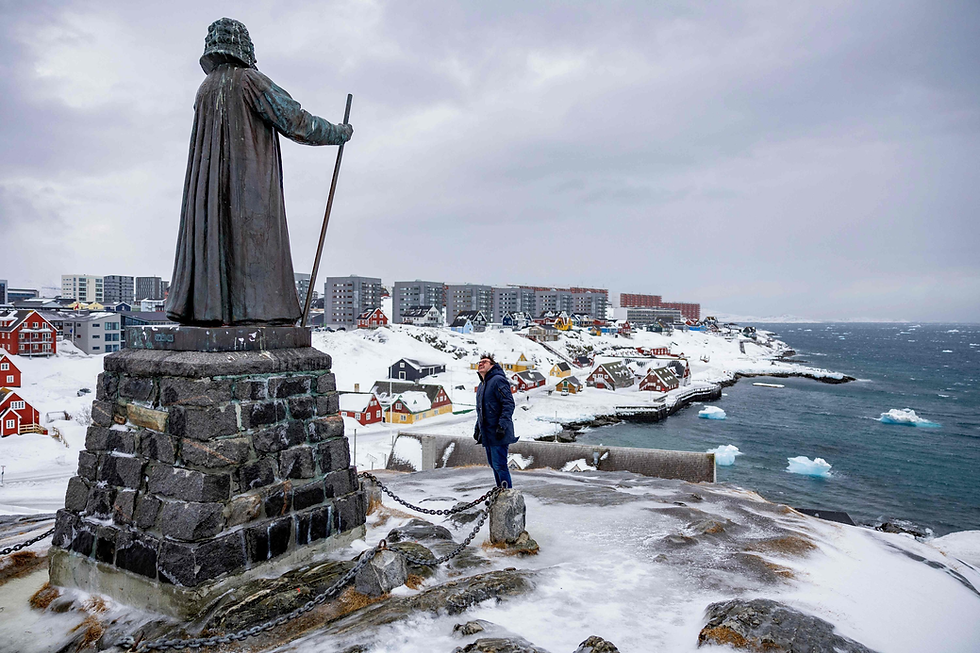
The transatlantic relationship, long a pillar of European security via NATO, has frayed under the second Trump administration. The 2026 Greenland crisis epitomized this shift. U.S. President Donald Trump openly threatened military annexation of the Danish Arctic territory, citing national security needs against perceived Russian and Chinese threats, and even imposed tariff pressures on European allies before backing down at the World Economic Forum in Davos on January 21.
This episode, which saw European nations like France, Germany, and the UK deploy symbolic military contingents to Greenland, highlighted deepening rifts and prompted calls for greater European autonomy. Macron framed these developments as a "Greenland moment" and called on Europe to confront its dependencies and build resilience. In interviews with major European outlets, he emphasized that the EU must move beyond naivety, especially as the U.S. pursues isolationist policies and China floods markets with subsidized goods.
Macron’s Ambitious Proposals: Investing in Europe’s Future
At the heart of Macron's gambit is a call for massive investments to secure Europe's strategic edges. He proposed €1.2 trillion annually in combined public and private funding for defense, clean energy, artificial intelligence, and quantum technologies, areas where Europe lags behind the U.S. and China. This includes bolstering defenses in the Baltic region against Russian threats and expanding North Sea wind farms for energy independence.
To finance this, Macron advocated for "future-oriented eurobonds," a common EU debt mechanism, to pool resources without burdening individual nations' budgets. He argued for "coherence" over outright protectionism, suggesting the EU impose equivalent standards on imports to safeguard key hubs like Germany's industrial heartland and France's emerging tech sectors.
These ideas build on reports by former European Central Bank President Mario Draghi and ex-Italian Prime Minister Enrico Letta, who will join leaders at the February 12 retreat to discuss competitiveness and single-market reforms. EU Commission President Ursula von der Leyen has echoed the urgency, proposing a "two-speed Europe" where willing countries advance on economic integration if full consensus stalls.
Controversies and Divisions Within the Bloc
Macron's vision is not without critics. In Berlin, fiscal conservatives view eurobonds as a French scheme to mutualize debt, potentially widening north-south divides between prudent northern economies and more spendthrift southern ones. Germany's push for reforms by the end of 2026 reflects caution, emphasizing implementation timelines over new borrowing.
Broader skepticism stems from Europe's open-market ethos clashing with protectionist rivals. The U.S. under Trump has ramped up tariffs, while China's state subsidies undercut European manufacturers. Macron's "European preference" approach, favoring intra-EU trade and regulations, aims to level the playing field but risks escalating global trade tensions.
Openness Versus Sovereignty: Europe’s Dilemma
Europe's geographic openness has made it the world's most integrated market, yet it is encircled by assertive powers. As Macron noted, the bloc invests far less in critical sectors than its competitors, facing a "tsunami" of cheap imports and geopolitical pressures. This dilemma demands cohesion: integrating eastern defenses, diversifying southern supply chains, and recalibrating transatlantic ties with realism.
Russia's stance on the Greenland crisis, downplaying it while invoking historical precedents like the Alaska purchase, illustrates how adversaries might exploit divisions. Meanwhile, AI investments remain a flashpoint, with Europe prioritizing regulation but needing infrastructure to compete.
Charting the Path Forward
If empowered, Europe could redraw global maps through Arctic alliances, African partnerships to counter Chinese influence, and tech leadership. The February 12 retreat offers a pivotal moment to endorse a single-market roadmap, potentially mandating reforms by 2028.
Macron's gambit is clear. In an era of "fiercer" rivals, Europe must prioritize geographic and economic unity to stand firm. Failure to act risks relegation to the sidelines of history. As leaders convene, the world watches whether the EU will seize this moment or succumb to fragmentation.
Quote Highlights
Macron: "Europe must rise as a global power or risk being swept aside."
Macron on Greenland: "A wake-up call for Europe to confront dependencies and build resilience."
Analysts: "Trump’s aggressive posture risks eroding U.S. influence while accelerating the EU’s push for strategic independence."


Comments