Greenland Is Not a Bargaining Chip
- Jack Oliver
- Jan 8
- 3 min read

Denmark at the Center of a Global Power Struggle

From Copenhagen, the debate over Greenland feels profoundly different than it does in Washington, Paris, or Brussels. What is discussed elsewhere as a geopolitical chess move or a bargaining tactic with Donald Trump is, for Denmark and Greenland, an existential question of sovereignty, security, and democratic self-determination.
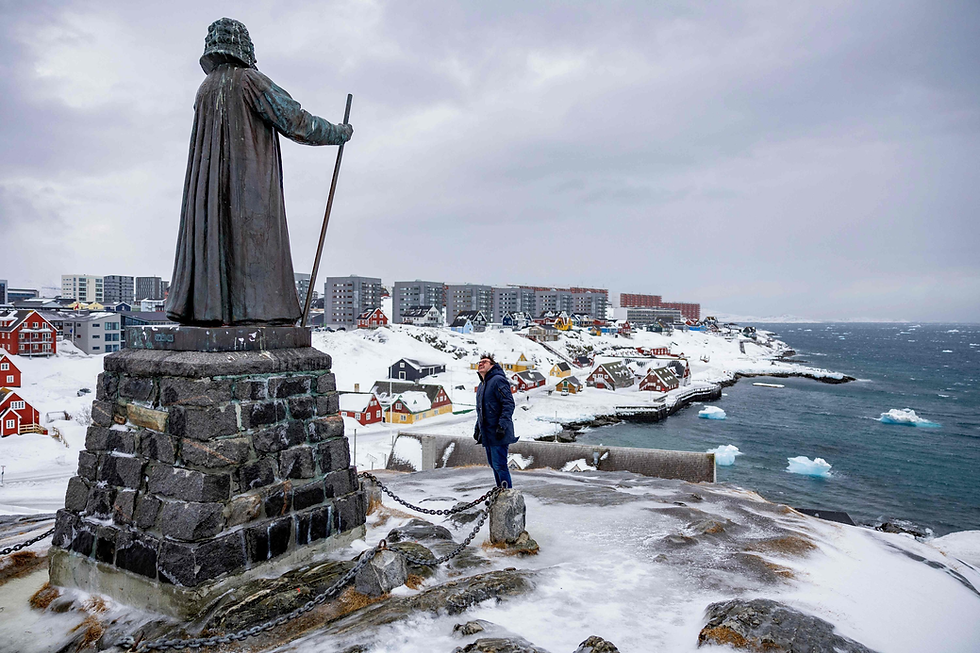
Greenland is not an abstract territory on a map. It is home to 56,000 people with their own parliament, language, culture, and political aspirations. Any discussion about its future that excludes Greenlandic voices is not merely incomplete. It is illegitimate.
“Greenland belongs to its people. Decisions about its future must be made in Nuuk, not negotiated elsewhere.”
Sovereignty Cannot Be Conditional
European leaders now find themselves trapped in a profound paradox. On one hand, they insist, rightly, that Russia’s invasion of Ukraine is an unacceptable violation of sovereignty and territorial integrity. On the other, when the US president openly threatens to annex Greenland, the European response becomes hesitant, legalistic, and conspicuously restrained.
From a Danish perspective, this hesitation is alarming.
Denmark is not just another EU member state. It is a founding NATO ally and one of Washington’s most reliable partners. Copenhagen has repeatedly aligned itself with US security priorities, from Afghanistan and Iraq to Ukraine. If Danish territorial integrity can be treated as negotiable in the name of maintaining US goodwill, then the credibility of NATO’s collective security guarantee is fundamentally weakened.
Sovereignty cannot be defended selectively. Either borders matter, or they do not.
If Denmark’s borders are open to negotiation, NATO’s promise of collective defense loses its meaning.
Greenlandic Voices Are Not Optional
One of the most troubling aspects of the current debate is how rarely Greenlanders themselves are heard. Discussions in Washington and European capitals frame Greenland almost exclusively through the lens of military positioning, Arctic shipping lanes, and access to critical minerals.
Yet Greenland is not an empty strategic asset. It is a self-governing society with a long and painful colonial history, a history that makes it particularly sensitive to decisions imposed by distant powers.
Any future change in status must come from Nuuk, not Washington, Brussels, or Copenhagen. Treating Greenland as leverage in negotiations with Donald Trump risks repeating precisely the patterns of great-power arrogance that Europe claims to oppose elsewhere.
Nordic Security Put to the Test
The crisis also has broader implications for Nordic and Arctic security cooperation. The Nordic countries have spent years deepening defense integration, coordinating Arctic policy, and strengthening deterrence in the High North.
A US threat against Greenland introduces a destabilizing variable into a region that depends heavily on trust and predictability.
For Norway, Sweden, Finland, and Iceland, the lesson is unsettling. If pressure can be applied to Denmark today, it could be applied to others tomorrow. The Arctic’s stability relies not only on military capabilities but on the assumption that allies do not coerce one another.
That assumption is now under strain.
The Arctic remains stable only as long as allies trust one another’s red lines.
Denmark’s Diplomatic Dilemma
Denmark faces an unenviable balancing act. Confronting Trump too aggressively risks undermining US engagement in Ukraine, a war that directly affects European security. Remaining silent, however, risks signaling that Danish sovereignty is conditional on Washington’s approval.
This is not merely a Danish problem. It is a European one.
If Europe cannot clearly defend the territorial integrity of one of its own NATO and EU members, its moral authority in confronting Russian aggression erodes. The argument that “this time is different” will not convince audiences in Kyiv, or Moscow.
Scandinavian Public Opinion Is Shifting
Public opinion across Scandinavia reflects growing unease. While support for Ukraine remains strong, there is increasing concern that Europe is becoming overly dependent on an unpredictable US presidency.
The idea that fundamental principles might be quietly traded away behind closed doors resonates deeply in societies that place a high value on rule of law, transparency, and democratic consent.
The fear is not just about Greenland. It is about precedent.
A Line That Must Be Drawn
Small nations understand better than most what happens when great powers negotiate in shadows. Scandinavian history offers no shortage of cautionary tales.
Greenland must not become a bargaining chip in a transactional world order. Defending Ukraine’s sovereignty while hesitating to defend Denmark’s is not pragmatism. It is contradiction.
If Europe wants to preserve the postwar security architecture it so often invokes, it must be willing to defend it consistently, even when doing so is inconvenient.
Especially then.
Once sovereignty becomes negotiable, no ally is truly safe.


Comments